This is the website of Abulsme Noibatno Itramne (also known as Sam Minter).
Posts here are rare these days. For current stuff, follow me on Mastodon
|
I’m following the Pirate Bay trial on TorrentFreak. It is an important test. Pay attention.
50% of Charges Against Pirate Bay Dropped
(enigmax, TorrentFreak, 17 Feb 2008)
here has been high drama on the second day of the Pirate Bay trial. Due to serious shortcomings in the prosecution evidence, around 50% of the charges in the case are going to have to be withdrawn. The defense describes it as a ’sensation’, seeing half of the charges being dropped on the second day.
What has been shown in court today is that the prosecutor cannot prove that the .torrent files he is using as evidence actually used The Pirate Bay’s tracker. Many of the screenshots being used clearly state there is no connection to the tracker. Additionally, prosecutor Håkan Roswall didn’t adequately explain the function of DHT which allows for so called “trackerless†torrents.
The flaw in the evidence was pointed out by Fredrik Neij (TiAMO), who requested to comment on Roswall’s explanation of how BitTorrent actually works. Fredrik said that the prosecution misunderstood the technology, and told the court that the evidence doesn’t show that the Pirate Bay’s trackers are used.
 Sam and Ivan talk about: Sam and Ivan talk about:
- Travel Stories
- Frugality
- Recession Fun
- News Coverage
- A Town Called Roy
- Stimulus
- Copyright Crackdown
 1-Click Subscribe in iTunes 1-Click Subscribe in iTunes
 View in iTunes View in iTunes
 Podcast XML Feed Podcast XML Feed
 It was time for yet another Doctor Who DVD. In this case, it was time for Disk Two of a story we started in September. This was the Third Doctor story Doctor Who and the Silurians which is interesting because it is the only Doctor Who story that had “Doctor Who and the…” in the title shown on screen. It was an accident. Somebody screwed up when producing the titles. Oops. It was time for yet another Doctor Who DVD. In this case, it was time for Disk Two of a story we started in September. This was the Third Doctor story Doctor Who and the Silurians which is interesting because it is the only Doctor Who story that had “Doctor Who and the…” in the title shown on screen. It was an accident. Somebody screwed up when producing the titles. Oops.
The last few sentences were quoted exactly from my review of the previous disk. I’m getting lazy.
In this second half we find out a bit more about where the aliens come from, and there are some battles. The Doctor is trying to make peace between the humans and the Silurians, but most of the humans, and most of the Silurians, want no such thing. The Doctor tricks the Silurians into something he hopes will avoid conflict but keep them alive. Of course, the humans decide immediately thereafter to blow them all up.
Oh well. And that was the end.
As usual with these older Doctor Who episodes, the pacing is VEERRRYYY SLLLLOOOOWWWW. And of course the effects are awful. They have some level of charm though.
We need to go faster though. I like the Fourth Doctor and beyond much better than the first three.
[05:15 UTC edited for a typo and minor wording change]
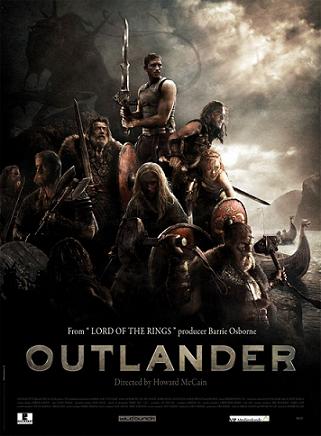 So, a little while ago… I think it may have been two weekends ago, but I’m not really sure… Amy had some sort of extra long rehearsal or something, so Brandy and I decided to go to a movie. We had looked earlier at the movie list, and there wasn’t much that either of us thought was really all that exciting. I listed some I’d be “OK” with though. And when we actually got to the theater, Brandy spontaneously chose Outlander, most likely influenced by the exact time it was starting relative to what time it was. So, a little while ago… I think it may have been two weekends ago, but I’m not really sure… Amy had some sort of extra long rehearsal or something, so Brandy and I decided to go to a movie. We had looked earlier at the movie list, and there wasn’t much that either of us thought was really all that exciting. I listed some I’d be “OK” with though. And when we actually got to the theater, Brandy spontaneously chose Outlander, most likely influenced by the exact time it was starting relative to what time it was.
In retrospect, this may have been a mistake.
OK, the basic premise of this movie, and pretty much as much as I knew going in, was that an alien crash lands amongst the medieval Vikings, and then things happen. In the first few minutes, the alien crashed, opened its helmet… and it was a PERSON. This wasn’t even a Star Trek style alien with bumps on its head. Just a generic person. I had been hoping for a movie sort of like ET, but set in the middle ages. No such luck.
Anyway, the first half of the movie was really bad. It seemed like nobody in the movie could act at all. There were a few words here and there and some grunting and fighting. Oh, and a dragon showed up. And of course the alien is going to save the village from the dragon and all. Of course.
Anyway, it was pretty bad. Laughably times at times, but not so much so that you actually enjoyed it because it was so bad.
I think Brandy retained this feeling through the whole movie. She was ready to walk out.
On the other hand, I thought the movie started to improve somewhat about half way through… right after they started giving some backstory on what had happened to the alien guy before he crash landed.
But I think the main thing is that they pretty much stopped even trying to do anything with the characters… there was no more getting to know the people or any of that stuff… they just started running around fighting the dragon. So just your normal sort of action and adventure thing with chases and fights and explosions and such. And OK, that stuff is usually not enough for me in a movie… I like to actually care about the characters some, and perhaps even think a little. But in this case, the constant running around and stuff at least meant that none of the people were trying to have conversations or really talk very much, which they weren’t very good at.
I did feel sorry for the dragon though. I actually ended up empathizing with the dragon more than any of the main characters. Poor dragon. You really wanted the dragon to win, because pretty much all of the humans sucked.
So, I doubt it is even still in the theaters, but if it is, save this for video… or not at all. You won’t miss it.
 Sam talks about: Sam talks about:
- Ivan MIA
- Obama Cabinet Ethics
- Rendition
- Stimulus
- HFCS
1-Click Subscribe in iTunes
View in iTunes
Podcast XML Feed
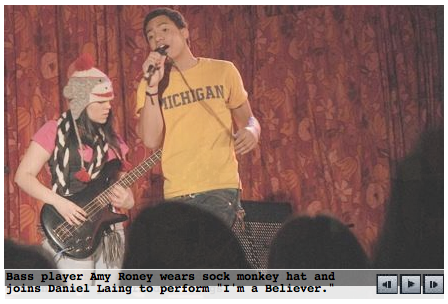
Young musicians “Monkee” around
(Steve Shay, 2 Feb 2009, West Seattle Herald)
Seattle’s Paul Green School of Rock, better known as “The School of Rock,” featured nearly 20 area musicians to perform 22 songs popularized by the popular 1960’s band, The Monkees, on stage at the West Seattle Admiral Theater Jan. 31.
The school, now a national phenom, was established in 1998, five years before the hit movie of the same name was released. The Seattle school’s music director, Benjamin Barnett, who himself sings and plays several instruments and records his own music, seemed as big a hit with his students and audience as the songs they performed.
It was a sell-out crowd, and many came to watch their kids, or neighbor’s kids, perform. But some attended just because they loved The Monkees and wanted to hear the 7 to 17 year olds take a whack at the old numbers.
And since I got a nice little handheld digital recorder thing for Christmas…
School of Rock Seattle plays “I’m a Believer”…
I remembered way later than I should have, that there is an election going on right now… one where the deadline for submitting your ballots is just barely more than two hours from now. And it is already too late to mail the ballot, as is preferred, so instead I have to drive to the one drop box in my town. (About a 20 minute drive away.) Oops.
There is only one item on the ballot this time. Director of Election for King County. The candidates and their information are here.
This is a non-partisan office (good). Well, actually I think it should be an appointed office, but if it is going to be elected, at least it should be non-partisan. Whatever.
I’m going to go only by the stuff these people have on the voter’s pamphlet, and by what they have on their websites.
Here we go:
- David Irons – Seems competent. Has some experience.
- Sherrril Huff – The incumbent, although she has only been there a few years, so not a lifer. She seems to have done a decent job. Has the endorsement of the two newspapers and a bunch of other people.
- Julie Kempf – No website. Fail. And yes, I see you gave your email address, but I’m not going to email you. And from your email, I see you did register a domain for yourself… you just didn’t put anything there. If you can’t make sure you have a website for your campaign, how am I supposed to think you can run an election? From your pamphlet statement, it actually looks like you have done so in the past. But a website is a minimum requirement for a real campaign these days. Sorry.
- Bill Anderson – Repeat everything I said about websites for Ms. Kempf again here. Oh wait, you do have a website, it just isn’t listed in the normal place, but instead in the middle of your statement. It is here. OK… he’s a “semi-retired” banker who managed the handling of paper checks and the transition to electronic management of such things. He actually seems interesting.
- Christopher Clifford – No website, come on. In his statement he seems to start attacking one of the other candidates… “There are actions I believe are unworthy of your vote. Filing a false declaration, lying about where you live, being accused of assaulting your mother, being arrested for forgery, and being arrested for attempting to run over a police officer. These are the actions of arrogance and dishonesty. These are not the actions we look for in individuals seeking your trust, your confidence, your vote.” Of course, I have no idea who he is talking about or why. Oh wait, it is about this. That site is just odd. WTF? And what does it have to do with the Director of Elections? That person isn’t running here. He doesn’t seem to have any real relevant experience here either.
- Pam Roach – A State Senator, which means she comes from a partisan background. She does seem competant though. The most interesting thing here is she mentions that Huff (the incumbent) was in favor of keeping this an appointed position. Now, she was the incumbent, so, Duh, but it is good to have that additional info.
So, OK, thought process… I generally think this is the kind of position that should be appointed… or actually “hired” based only on qualifications and not on political grounds, and probably approved by the legislature or something to provide a level of protection against political hires or patronage and such. It sounds from some of the reading here (mainly Pam Roach’s site) that there is a bit of politics here unfortunately, and the incumbent may be part of that. So since this *is* now an elected position, I want to go with one of the candidates that is as detached as possible from people currently holding office or running for office, etc. Ya know, I think I’ll go for the banker. Looking at his site (which isn’t pretty or anything) it actually has some content on it regarding the elections process and some problems with it. And listening to the first few minutes of the interview he has on his site, he sounds reasonable. He’s talking about the crap technology used for the elections and how it needs to be replaced by something that is actually reliable, secure, etc. He talks about adding transparency to the process, etc. He seems to actually be THINKING about the elections process, rather than just talking in vague generalities.
You won my vote Bill.
My vote: Bill Anderson
Last week my laptop for work melted down and the tech support guys had to reimage my hard drive. Now, having had this happen about once a year for the last few years, I’ve grown smart and keep most of my important documents and such on the network, not on the laptop, so I didn’t lose very much, and what I did lose wasn’t really important.
Other than time. I did lose almost a day to waiting for the computer to get reimaged, then reinstalling software I use on a regular basis and getting all my preferences set back to how I like them, and rebookmarking things I need frequently, etc.
But I delayed slightly on the one last thing I needed to install again… yesterday I put LeechBlock back on my Firefox. I’ve used it for over a year to control my own weaknesses. I’m a news junkie. Google Reader is addictive. It is easy to get lost in there when you shouldn’t. And before you even know it you have wasted more time than you would have wanted. This kind of thing never stopped me from getting things done when things really needed to get done, but I could feel it drawing me in during times when I’m sure I could have done better things with my time.
So I’ve had it set to restrict me from that site (and a variety of others) to only 30 minutes during work hours. (And to not let me in to the settings to change it if I’ve hit my limits.) I usually use those minutes while eating lunch at my desk. But the rest of the time, no fun websites, not even for a “quick glance”.
Yeah, yeah, I know the same could be achieved by a little thing called “willpower”. And I know there are plenty of ways around it that are dead simple. But it is just that little nag that says, “No, not right now, you can wait until you get home…” that is helpful. It is a good tool.
And in the two days or so I didn’t have it set up, I don’t think I got sucked in too much, I probably wouldn’t even have triggered the 30 minute limit. But it is still good to have it on. Just to keep me honest.
So, keeping with what I started when I finished the previous book, I just looked up my “Kindle Ratio”… namely the percentage of the last 20 books I’ve read available on Kindle. I’ve said that as soon as this ratio reaches 50%, I want a Kindle. Well, it stays steady at 35%… 7 of the last 20 books. So we’re still not quite there unfortunately.![]()
|
|