This is the website of Abulsme Noibatno Itramne (also known as Sam Minter). Posts here are rare these days. For current stuff, follow me on Mastodon

Categories

Calendar

July 2026
S M T W T F S
 1234
567891011
12131415161718
19202122232425
262728293031  

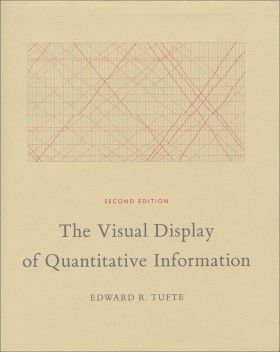
The Visual Display of Quantitative Information: Second Edition

Author: Edward R. Tufte
Original Publication: 2001
Started: 2010 Oct 24
Finished : 2010 Oct 30
Format: Hardcover
197 pages / 7 days
28.1 pages / day

So, back to a physical book again. This one was part of the spoils from going to Tufte’s Lecture back in June. All the attendees got his four major books, of which this, The Visual Display of Quantitative Information is the first. Since I went to the lecture for work, this is on my work non-fiction list.

Of course, I’d seen this book around and heard about it for many many years. I remember talking to colleagues about this book way back when I first started doing web and internet related stuff in the 90’s. That would have been the first edition of course. What I read now is the second edition, but I gather the changes were more in terms of corrections and improvements to images and such, rather than fundamental changes to the content.

Tufte’s books been, and especially this one, have been held up essentially as bibles for good visual information design. Having now seen his lecture and read the first of his books, my initial impression is that while he certainly makes a number of good points, especially when it comes to things that are routinely done badly and which should be avoided, he falls down a bit in terms of his positive suggestions for new sorts of presentations. It seems that perhaps he is a little overhyped. Of course, there is also the possibility that it only seems that way because many of his recommendations have become so widely regarded over the years that when you hear them now you think “Well, duh! How could anyone think otherwise?” whereas when he first articulated his ideas they were a brand new perspective. I think this is quite likely.

Of course, his major complaint is with information graphics that are full of what he calls “chart junk” or misrepresentations. Basically decorative elements that add no information and often detract from understanding the data, or choices of graphical treatment that leave a casual viewer with an incorrect impression of the data. He gives many examples of these sorts of bad usages. The core message is to strip away the extraneous elements and concentrate on the data itself, and then be extremely careful to show that data in a way that highlights the important aspects of the data honestly. This is excellent core advice.

He does get a little too sparse in some cases though, or recommends presentations that he himself says may stray into “puzzle” territory, where the person looking at the chart has to figure out what some of the new conventions mean. I suppose some of this just has to do with being used to the standard conventions. But in some cases I think it is just a case of taking good general principles a bit too far. For instance, remove the frame and gridlines around many plots. Now, certainly gridlines should be light enough to not interfere with looking at the data, but I like having them damn it, and the frame separates out the data from whatever is surrounding it. Yes, I get they may not be completely necessary, but I actually think they help in many cases.

Oh, and of course Tufte introduced sparklines. These can be useful in certain contexts, but I generally don’t like them.

There. I got my curmudgeonly bit out.

In any case, this is a classic on these topics, and well worth reading. Even if you don’t buy into every last bit of what Tufte is saying, the general principles are right on the money and worth considering whenever you are trying to present any quantitative data graphically.


FaceTime with Grandma B


First Snow

Roscoe Needs Some Tissue

[tube]3-mpkK8XfIg[/tube]

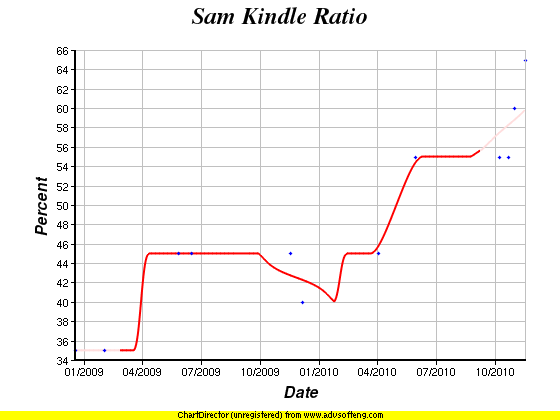
Kindle Ratio for 15 Nov 2010: 65%

So, here we are with the Kindle Ratio (what proportion of the last 20 books I’ve read are available on Kindle) as of right after my post about Ender’s Shadow. The percentage goes up a bit because this last book was available, where as the one that dropped off was not. As mentioned, this metric is now biased by the fact that the way I pick books now prefers Kindle books. For those interested, the 20 books this was based on were:

  1. YES – Ender’s Shadow
  2. YES – The Elegant Universe
  3. YES – Children of the Mind
  4. NO – Introduction to Algorithms
  5. YES – Xenocide
  6. YES – The Geography of Bliss
  7. YES – Speaker for the Dead
  8. NO – First Break all the Rules
  9. YES – Ender’s Game
  10. YES – Until the Sea Shall Free Them
  11. YES – Foucoult’s Pendulum
  12. YES – Java The Complete Reference
  13. NO – Harry Potter and the Deathly Hallows
  14. YES – The Audacity of Hope
  15. NO – Harry Potter and the Half-Blood Prince
  16. NO – Data Mining
  17. YES – The Children of Hurin
  18. YES – Dreams from my Father
  19. NO – The Odyssey
  20. NO – Rise and Fall of the Confederate Government (Vol II)

I’ll note as I have the last few times that other editions of The Odyssey and the Rise and Fall of the Confederate Government (Vol II) are available on Kindle, just not the specific editions I read.

Amy and Grandma D


Taken 2010 Nov 19 on the Seattle Underground tour.

Spending, Scanning and Groping

In the latest Curmudgeon’s Corner…

Sam and Ivan talk about:

  • Deficit Stuff
  • Airport Security

Just click to listen now:

[wpaudio url=”http://www.abulsme.com/CurmudgeonsCorner/CC20101114.mp3″ text=”Recorded 14 Nov 2010″]

or

1-Click Subscribe in iTunes

View Podcast in iTunes

View XML Feed

Kitchen Concert

Recorded, edited and uploaded to YouTube all from my iPhone. Posted onto my blog from my computer though, although I guess I could have done it on my iPhone if I wanted to.

First Scuffs

So yesterday I thought my new iPhone 4 was in my pocket. In fact it was on my lap. So when I got out of my car it fell onto the pavement in my driveway. It was not unscathed.

Just some small scuffs in the metal and a tiny chip on the edge of the glass in one spot. Very minor. If you were not looking carefully you would never notice. And even then you would note that the cosmetic defects were tiny and trivial.

Nonetheless these are the first blemishes on my shiny new iPhone. And as always the first time this happens with new gadgets it makes me sad.

But I guess it means it is truly mine now. :-)

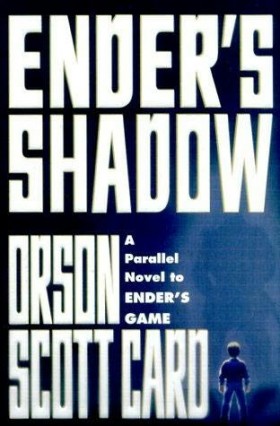
Ender’s Shadow

Author: Orson Scott Card
Original Publication: 1999
Started: 2010 Oct 16
Finished : 2010 Oct 24
Format: Kindle
8807 locations / 9 days
979 locations / day

So here we are, continuing the Ender Series. I had thought that I had read Books 1 to 4, but had never read any of the Shadow books that start with Book 5, Ender’s Shadow. Within seconds of starting the book however, I realized that I was wrong. I had indeed read Ender’s Shadow before. While I couldn’t really remember forward, and know for sure what was going to happen on the next page or the next chapter, I did get a strong sense of familiarity with every page I read, like ongoing deja vu. Which of course is in perfect alignment with me having read this before, but many years ago. Most likely not long after it came out in 1999.

In any case, this is essentially a retelling of the same story told in Ender’s Game, but told from the perspective of one of the minor characters in the original book, namely “Bean”. In some ways Bean ends up being a more interesting character than Ender himself, if only by the mere fact that he wasn’t seemingly always the best at everything (although still at many things) and therefore had do understand and deal with his secondary role. At the same time, he was more aware of the larger context of what was going on than Ender, who was pretty oblivious to some major things, of course including the major reveal at the end of the first book. Bean on the other hand, figured out what was really going on and undertook his actions fully knowing the consequences, which in some ways made those events even more poignant.

In more general terms, as Card returns to revisit the events of the first Ender book, he also returns more to the form of a more event driven story, rather than the exploration of philosophical ideas that characterized books 2-4. And while I do enjoy those sorts of explorations, it was nice to return to a more “direct” sort of story for a bit. And it is also fun to see the same events from two radically different perspectives. This is of course a narrative trick that has been used in many different contexts before, from “Rosencrantz and Guildenstern Are Dead” to “Lower Decks” and many others, but it is still fun on occasion.

Bottom line, a good addition to the series which leaves you anticipating the next one…